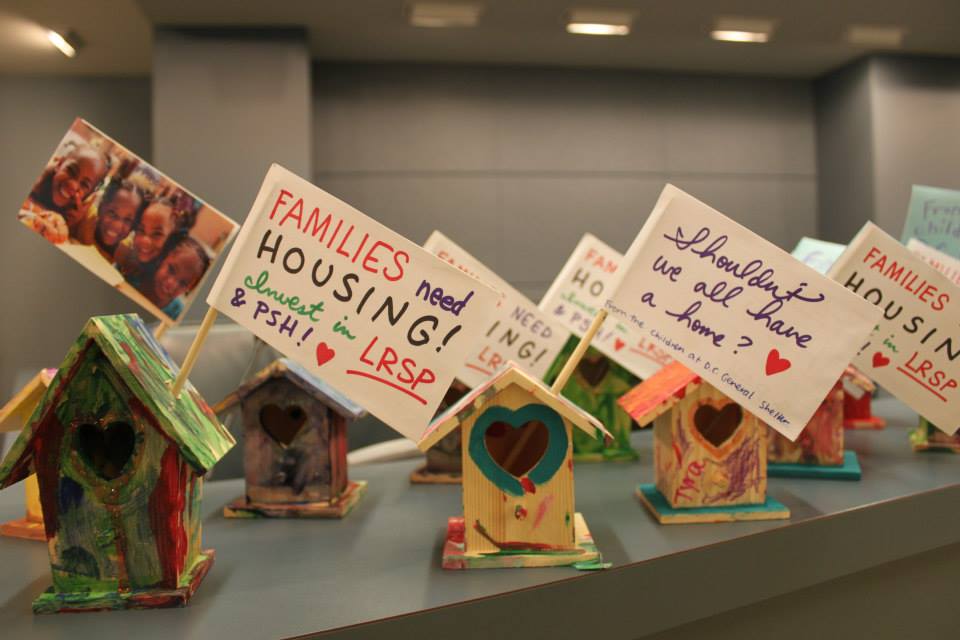
It’s time for a change. We need D.C. to recommit to ending homelessness with investments in deeply affordable housing, and we need them to start with this budget. D.C. residents cannot wait any longer.
Learn more here about what needs to happen and raise your voice for housing justice for D.C. residents!
In Mayor Bowser’s first year as mayor, she released Homeward DC, with the following proclamation: “Together, we will end long-term homelessness in the District of Columbia. By 2020, homelessness in the District will be a rare, brief, and non-recurring experience.” The Bowser Administration failed to keep this promise, and D.C. residents are feeling the impact of that broken promise daily. Not only do we see housing insecurity increasing in D.C., with evictions at a historic high, but the mayor’s final budget proposal contains precisely zero dollars dedicated to ending homelessness.
Last year, despite many voices raising the alarm that unhoused D.C. residents were facing significant and increasing hardships, D.C. did not fund a single voucher for homeless individuals and funded far too few for homeless families. Unhoused individuals were left in harm’s way when the federal government declared, with no housing or shelter resources, that it would forcibly remove people from the streets of D.C. Because local government had failed to invest in housing solutions, homeless individuals have faced escalating property destruction and law enforcement harassment from both the federal and our local government in the last year. Meanwhile, two consecutive years of eviscerating the rights of D.C. residents in rapid re-housing gutted due process and cemented an abrupt, inhumane benefit cliff. Combined with the failure to adequately invest in the long-term housing supports that actually work for families, these policy choices have forced housing-insecure families into a never-ending loop of time-limited housing, eviction, homelessness and shelter.
Excerpts from D.C. Council Testimony
“Since taking in my grandchildren, I have given them love, stability, structure, medical care, school enrollment, and safety. What I have not received is stable housing support. I did what the system asked of me. I prevented two children from entering foster care. I should not now face homelessness for doing so.”
“Funding had dried up, leaving us high and dry, with the daunting task of figuring things out on our own. My heart is heavy with the weight of my circumstances. I’m not just fighting for myself for permanent supportive housing; I’m fighting for my daughter, who deserves a stable and loving home.”
Email D.C. Leaders in Your Own Words: If you would like to write your own email that goes to all councilmembers and the mayor, along with constituent services staff, use the form below.
The Washington Legal Clinic for the Homeless envisions a District of Columbia where housing is a human right, racial justice is a reality, and all people have true and meaningful access to the resources needed to thrive.
Recently, making ends meet has become more difficult for low-income D.C. residents. Housing has become more expensive, cost of living continues to increase, and the social safety net is steadily unravelling. While the precariousness of the situation is known, the mayor’s proposed budget fails to reflect the need. Low-income and primarily Black residents are the most impacted by critical program and funding cuts in D.C.’s FY27 local budget. D.C. Council needs to invest in permanent housing resources, legislate so that DHS improves its provision of services, expand access to rental assistance, suspend all full encampment evictions, and improve the shelter system.
End Homelessness: Housing Vouchers
One of the most effective ways to end D.C.’s homelessness and affordability crisis is to use and appropriately fund all of the different types of vouchers available. Homelessness has risen 4.4% since 2025. However, Mayor Bowser’s proposed budget includes zero new vouchers to end homelessness in FY27. Residents need access to a variety of voucher types to meet their housing needs. PSH vouchers are appropriate for some, but LRSP vouchers are also necessary, less costly, and more accessible to a larger number of D.C. residents in need of stable housing.
This will inevitably lead to increased homelessness. D.C. has an unemployment rate 155% of the national average (6.7% versus 4.3%), an Emergency Rental Assistance Program with a higher-barrier eligibility threshold and only $7 Million FY27 budget, a Rapid Re-Housing program that has been largely dismantled and with paused entries, voucher programs with paused matching despite D.C. Council allocating those funds last budget season, and zero new vouchers for individuals or families. Circumstances are dire for those who rely on D.C.’s human services sector.
D.C. Council must adequately fund vouchers for individuals and families. This is necessary to protect encampment residents from future targeting and prevent prolonged homelessness amongst families in shelter and temporary housing programs. D.C. Council must also ensure that DHS and DCHA have the requisite staffing and coordination for participants to be quickly identified and approved for permanent housing resources and to swiftly lease up. Agency bureaucracy prolongs homelessness.
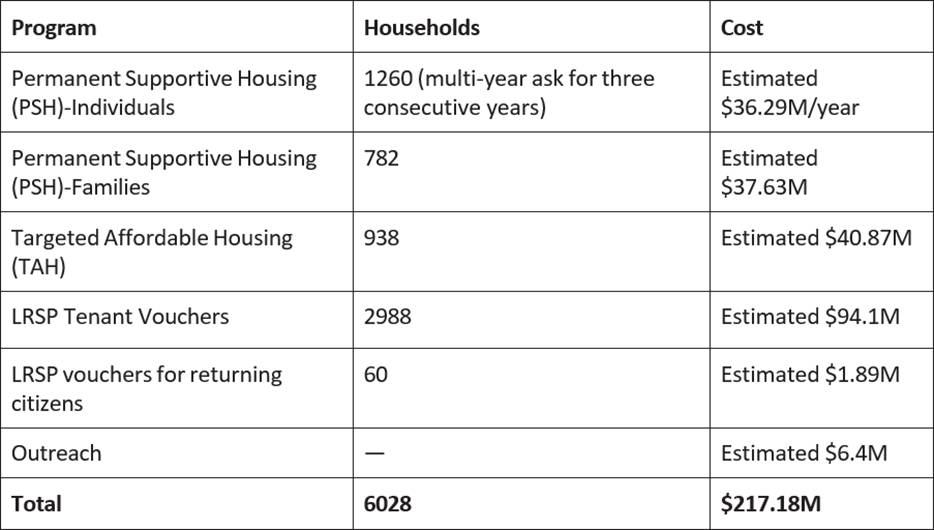
We, along with our coalition partners, request the FY27 budget meet the full housing needs of D.C. residents by funding enough vouchers to permanently house approximately 6,000 households. Specifically, we are asking for the following:
Once vouchers are funded, this committee and D.C. Council at large must ensure that DHS is appropriately budgeting in order to properly administer funds allocated by D.C. Council. After being appropriated, DHS funds are often reprogrammed and shifted away from the programs and services that D.C. Council intended. Many of these changes are masked by opaque agency budgets and inaccurate accountings of programmatic costs.
D.C. Council must increase oversight of DHS and DCHA to promote more efficient voucher administration, utilization, and staffing, and to reduce bureaucracy that prolongs homelessness due to delays in distributing and utilizing vouchers. D.C. Council must also increase funding for all permanent voucher programs and increase investment in homelessness outreach services.
II. Prevent Housing Instability and Repeated Homelessness for Residents with Extremely Low Incomes
Rapid Re-Housing (RRH) was created to aid low-income D.C. residents, placing them on a path to financial fortitude by subsidizing the majority of their monthly rent. Unfortunately, the program has never achieved its stated ends. Its “one-size-fits-all” model cycles the lowest-income residents in and out of homelessness, sometimes saddling them with evictions and experiencing more financial harm than before entering the program. DHS has generally focused its resources on shallow subsidies, such as DC Flex, that, even when funded, are incapable of establishing enduring housing stability for the extremely low-income residents that make up the overwhelming majority of those who need housing assistance. However, in the proposed FY27 budget, Mayor Bowser even abandoned those meager shallow subsidies.
The decision not to fund permanent housing vouchers or shallow subsidies reflects a troubling policy seemingly indicating that D.C. residents who cannot afford to live in D.C. without government assistance/support should not be in D.C. Unfortunately, this stance is further supported when DHS utilizes its programs and funding to pay D.C. residents to leave D.C.
D.C. must meaningfully consider the housing needs of residents that cannot afford D.C. rents and make substantial investments in housing and supplemental resources that keep people permanently housed. We urge D.C. Council to require accurate and transparent program data and costs from DHS in all of its time-limited and shallow housing subsidy programs, including data on the long-term housing stability of participants after the assistance has ended, evaluate current DHS program outcomes and barriers to more appropriately invest in permanent housing stability, and fund permanent housing subsidies.
III. Expand Access to Emergency Rental Assistance
The Emergency Rental Assistance Program (ERAP) allows D.C. residents to avoid eviction and stay in their homes when they face emergencies that hamper their ability to afford rent. This budget year marks the second year ERAP has been cut, having lost nearly forty-five (45%) percent of its funding since Fiscal Year 2025. Due to last year’s legislative alterations that drastically restrict eligibility, ERAP is now inaccessible to many D.C. residents that need it. These were not data-driven changes. Changes were largely based upon unsubstantiated allegations of fraud, racist tropes, and classist myths about low-income, Black people. D.C. Council should amend the program yet again to expand access and prioritize tenant interests.
We ask that D.C. Council revise and pass updated ERAP legislation that reverses the harm of the current legislation, expands access, and requires landlord accountability and cooperation with the ERAP application process. Further, we ask that the ERAP application process be improved to ensure it is fully accessible, low-barrier, and legally compliant. Lastly, we ask that Council increase its oversight of DHS to require consistency in ERAP administration and distribution and regular agency reporting, including timelines, staffing, delays of administering organizations, and demographics of approved residents, ensuring residents can access sufficient funds to prevent massive displacement/eviction, trauma, and homelessness.
IV. Reform and Expand Access to Family Shelter System
D.C.’s housing landscape and social safety nets have been greatly diminished. This will naturally increase the number of D.C. residents that require and seek emergency and family shelter. D.C. Council must make these sites safe and accessible. Unfortunately, accessibility has seemingly decreased since the Virginia William Family Resource Center’s (VWFRC) move to 64 New York Avenue. While DHS assured D.C. Council that their services would remain just as accessible as they were in their Rhode Island location, our office’s shelter access case numbers indicate that this is not the case. Council must ensure that any eligible D.C. resident is able to access shelter. Once in shelter, residents should be treated with dignity, not subjected to unsanitary conditions, and not be forced to choose between access to safe shelter or keeping their belongings/remaining within their chosen family.
We urge this Committee to amend the Homeless Services Reform Act (HSRA) to require low barrier family shelter, implement consistent and standardized staff training so that families are not routinely, arbitrarily, and unlawfully denied shelter placements, and increase reporting and data on access, eligibility, and denials to D.C. shelter services.
Additionally, D.C. Council should enact legislative policies to ensure that all shelters, including current and future non-congregate shelter sites, operate at intended maximum capacity, with legal protections pursuant to the Homeless Services Reform Act (HSRA).
D.C. Council should fully fund and implement the Pets in Housing Amendment Act of 2024 and dedicate $1.5 Million towards secure storage options to safeguard the belongings of those experiencing homelessness. D.C. council should also reintroduce, pass, and fund the Housing is Maternal Health Amendment Act, and require DHS to permit legal services outreach at Virginia Williams Family Resource Center.
Conclusion
This is the most harmful proposed local budget for low-income residents in recent years. Many D.C. residents have made the difficult decision to leave the city or had the decision made for them after multiple D.C. budgets that have restricted access to crucial supports, refused to tax wealth, and funded affluent comfort over low-income survival.
D.C. Council must make a different decision for FY27or risk continuing this cycle of harm and displacement.
Testimony of Charisse Lue, Staff Attorney and Brittany K. Ruffin, Legal Director, Systemic Advocacy and Litigation of The Washington Legal Clinic for the Homeless
The Washington Legal Clinic for the Homeless envisions a District of Columbia where housing is a human right, racial justice is a reality, and all people have true and meaningful access to the resources needed to thrive.
We are all aware of the economic challenges now facing the District of Columbia and nationwide which make it even more critical that Council remain steadfast in its commitment to create and preserve affordable housing for the most vulnerable. While D.C.’s median rent is approximately fifty-four (54%) higher than the national median, an estimated forty-four percent (44%) of D.C. residents are rent burdened.. Over eighty-seven percent (87%) of those that are rent-burdened live below 30% AMI. Recent data shows homelessness remains above pre-pandemic numbers and the United States Marshall Service reported that the 2025 eviction filings increased by two-hundred fifty percent (250%). D.C. permits these trends to continue; they will undoubtedly cause an avalanche of socio-economic devastation for D.C. residents. Black D.C. residents are ninety-one percent (91%) of those experiencing homelessness in D.C. and will continue to be most impacted. D.C. Council must use all available tools to stop the harm and slow the displacement of current residents.
Currently, the Housing Production Trust Fund (HPTF) is the primary resource for the creation and preservation of deeply affordable housing, housing for residents with extremely low incomes (0-30% AMI). It is the most effective tool to remedy the dearth of deeply affordable housing in D.C. D.C. Council must protect and strengthen the progress D.C. has made over the last few years to prioritize the creation of deeply affordable housing.
The latest Housing Profile report from the National Low Income Housing Coalition (NLIHC) shows that over 56,000 D.C. renters have extremely low incomes (0- 30% AMI) with housing costs up 5% from the previous year. The dearth of affordable housing for the extremely low-income is currently as severe as -37,429, with only thirty-two deeply affordable homes available per one hundred renter households. These grim statistics do not even account for the barriers that the lowest income tenants face within the housing market when in need of accommodation for large families and accessible units for those with physical disabilities. We urge D.C. Council to continue recognizing the distinct housing needs of the lowest income residents of D.C.
Deeply affordable housing (0-30%AMI) is the most needed and the least created. Unfortunately, the utilization of funds for the creation of housing for the lowest income households continues to fall short of its legislative mandate. HPTF legislation explicitly mandates that fifty percent (50%) of the annual funds are to be spent for the creation of deeply affordable housing. In FY22, only twenty percent (20%) of HPTF expenditure spent was on the creation of deeply affordable housing units. In past performance oversight testimony, Director Green reported that that statistic doubled to forty-three percent (43%) for FY23. DHCD also projected that forty-four percent (44%) of the HPTF expenditures would be spent on the creation of affordable housing for those at or below 30% AMI in FY24. DHCD has yet to report the data for FY24 or FY25. While we hope for continued improvement, the lack of transparency is unacceptable. D.C. Council must continue to require and track DHCD’s adherence to HPTF requirements.
The Council enacted the Housing Production Trust Fund Transparency Amendment Act in FY23’s Budget Support Act. However, additional transparency measures are necessary. Additional provisions should require DHCD to provide detailed post-completion reports on each project and publish the number of projects that have met the eligibility requirements. DHCD should also include detailed data about each awardee and report the amount of the operating subsidy that is granted. D.C. Council should consider taking more affirmative measures to uphold HPTF funding allocations and consider separating the funds for the extremely low-income to avoid the misallocation of funds that occurred in the recent past.
The creation of deeply affordable housing is more crucial for D.C. residents than it has ever been. To meet the housing needs of D.C. residents, we strongly urge the Council to require additional transparency through reporting and create legislative safeguards that protect funds allocated for the creation of affordable units for households with the lowest income.
Testimony of Joshua M. Drumming, Policy and Advocacy Attorney, and Brittany K. Ruffin, Legal Director, Systemic Advocacy and Litigation, The Washington Legal Clinic for the Homeless
April 27, 2026
The Washington Legal Clinic for the Homeless envisions a District of Columbia where housing is a human right, racial justice is a reality, and all people have true and meaningful access to the resources needed to thrive.
This is among the most dangerous and tumultuous times D.C. encampment residents have faced. D.C. encampment residents are beset by local and federal agencies that are targeting them on the streets and a mayoral budget that does nothing to mitigate the harm caused or address the underlying issues at hand. As we have testified to on multiple occasions, DMHHS has decreased their notice period from fourteen-days to seven days. However, following both an executive order and a mayoral order, DMHHS oftentimes bypasses notice altogether through its use of the immediate disposition protocol – more so than it already did.
Immediate dispositions allow DMHHS to remove encampments without notice on the website or at the encampment site, as long as DMHHS claims they pose immediate risks to public health and safety. Under the current, purposefully vague standards, anything can qualify as a “public health and safety” risk. Justifications for determinations are not shared. As a result, encampments that appear to be no different than any other and pose no actual public risk are often swiftly dismantled and their residents are dispossessed. Many immediate dispositions are used for single persons. Those encampment residents often receive little to no outreach before removals and posted signage may not even be visible. Once removals begin, all, or nearly all, belongings are thrown away, despite DMHHS’s mandate to store non-trash items. The seizure and/or destruction of belongings during immediate dispositions without notice (or adequate notice), due process, or post-deprivation proceedings are likely unconstitutional.
Increased encampment evictions and immediate dispositions have worsened an already precarious situation. DMHHS removed thirty-six (36) encampments in Fiscal Year 2024. In 2025, DMHHS removed 128 encampments, a 355 percent (355%) increase. Despite a massive increase in displacement efforts, there is no increase in availability of housing resources. These numbers indicate a clear policy choice to prioritize erasing the visibility of homelessness instead of actually ending homelessness. While DMHHS used to conduct site cleaning engagements like bulk trash removals, agency leadership has recently admitted that their current policy is to dismantle and remove all encampments. If D.C. has an austerity budget, unnecessary encampment site removals should be eliminated. Last year, D.C. government spent $3.4 Million to displace its unhoused residents through encampment evictions. Those funds could have been better spent to permanently and stably house those same residents. When people have stable and safe housing opportunities, encampments will decrease. D.C. Council should suspend all encampment clearings. Instead, D.C. should conduct trash only cleanings, provide additional trash cans at encampments, and maintain portable bathrooms and hand washing stations. Further, D.C. Council should reallocate encampment eviction funds to invest in housing resources that end homelessness, create legislative policies that standardize requirements/criteria and definitions related to encampment evictions, establishing due process for encampment residents and minimizing opportunity for random and/or politicized encampment evictions.
The mayor’s proposed budget does nothing to provide stable housing. Mayor Bowser has funded zero vouchers in this budget to end homelessness. Last year, we testified to the harm that would come from funding zero vouchers for individuals. We have seen the results of that policy choice: increased trauma and harm. Now, D.C. Council has been given a budget substantially worse than the FY26 budget. Mayor Bowser has proposed an FY27 budget that excludes housing resources for unhoused individuals and unhoused families. The mayor’s budget narrative is that her proposals will “Grow D.C.,” but all residents are not included in the proposed vision for D.C. growth. Unsheltered residents are being evicted from the homes they have made and often displaced from D.C. It is deeply troubling for D.C. government to remove encampments while simultaneously defunding housing vouchers and other housing resources. Council must increase funding for all permanent voucher programs, increase DHS and DMHHS budget transparency, and increase investment in homelessness outreach services.
This budget comes at a time of unprecedented local-federal cooperation. Joint federal and local efforts to “clean up” or “beautify” D.C. has resulted in decreased encampment visibility, but District homelessness persists. Unhoused residents have been forced to relocate, but they still exist. D.C. homelessness still exists.
Following a federal executive order last year, local and federal officials coordinated to target and remove encampments, subjecting unhoused D.C. residents to increased risk of harm and criminalization.
Over the next few months, the United States will be celebrating its 250th anniversary and D.C. will be hosting the America250 events. Many advocates and community members are concerned that the events may prompt renewed efforts to rapidly displace unhoused residents. Time is of the essence. D.C. Council must ensure that there are adequate shelter and housing resources and appropriate legislative policies in place to ensure resident safety. Additionally, D.C. Council should suspend any D.C. government efforts to direct or cooperate with any federal government targeting of encampments for evictions/displacement.
D.C. Council must ensure that a resident’s housing status, income, and/or race do not determine whether they are included in the vision for D.C.’s future. The vision for D.C. must include a plan to meet the needs of all residents. D.C. Council must be willing and able to fight for and protect all of D.C.
Testimony by Charisse Lue, Policy and Advocacy Attorney
The Washington Legal Clinic for the Homeless envisions a District of Columbia where housing is a human right, racial justice is a reality, and all people have true and meaningful access to the resources needed to thrive.
Today’s hearing is full of legislation that aims to make drastic changes to major tenets and provisions of housing and tenant-related laws that will have a substantial impact on the lives of thousands of D.C. residents. Each of these bills could, and probably should, warrant its own hearing to allow community members, advocates, and council members a meaningful and thoughtful opportunity to respond and consider such substantive measures. Residents deserve thoughtful and meaningful consideration of such impactful provisions.
The Housing Production Omnibus Amendment Act of 2026 should not pass as currently drafted. It fails to include provisions that focus on remedying the dearth of deeply affordable housing for households with 0-30% AMI income. The proposed bill language should maintain the prioritization of creating and preserving deeply affordable housing, ensure that the production and preservation funds are spent only to create and preserve more affordable units and create a straightforward path to remedy D.C.’s affordable housing crisis. Currently, the Housing Production Trust Fund (“HPTF”) is the primary resource for the creation and preservation of deeply affordable housing and the most effective tool to remedy the dearth of deeply affordable housing in D.C. The HPTF legislation mandates that fifty percent (50%) of the funds must be expended for the purpose of creating or preserving deeply affordable housing for households with incomes at 0-30% AMI. The proposed bill does not include any requirement to prioritize housing creation for those with incomes at 0-30% AMI. Instead, it inappropriately lumps low-income and extremely-low income brackets together and allows up to fifty percent of the fund to be used within the Housing Production sub-account that explicitly excludes production for those with the lowest incomes. This new legislation should not be deprioritizing the demographic that needs housing the most in D.C. Any proposal for a new iteration of the HPTF must continue to prioritize 0-30%. AMI. This legislation should include an explicit mandate that fifty percent (50%) of the Housing Opportunity Fund and its sub-accounts are spent on increasing access to affordable housing for households with incomes of 0-30% AMI. If developers are not required to build deeply affordable units, they won’t.
The latest Housing Profile report from the National Low Income Housing Coalition (NLIHC) shows that over 59,000 D.C. renters have extremely low incomes (0- 30% AMI) with housing costs up 5% from the previous year. The dearth of affordable housing for the extremely low-income is currently as severe as -37,429, with only thirty-two deeply affordable homes available per one hundred renter households.
D.C. Council must protect and strengthen the progress D.C. has made over the last few years to prioritize the creation of deeply affordable housing. While the proposed bill, as drafted, segregates and focuses funds for the creation of an affordable housing sub-account, it de-prioritizes 0-30% AMI households and fails to include the HPTF mandates that are demonstrating to be effective in increasing the creation of deeply affordable units. In FY 2022, DHCD reported that only twenty percent (20%) of HPTF expenditure was spent on the creation of deeply affordable. However, after increased oversight by this Committee and the inclusion of mandates focused on combatting the dearth of deeply affordable housing, that statistic doubled. Director Green reported that for FY23 forty-three percent (43%) of expenditures of funds were for the creation and preservation of affordable housing for those within the extremely-low income bracket. The legislation proposes new exclusions that dis-incentivize producing deeply affordable housing.
Additionally, proposed language explicitly limits allowable uses of the ‘Affordable Housing Subsidy Account’ to expenditures for only shallow operating subsidies. Shallow subsidies do not result in permanent housing for those who do not have substantial incomes to maintain expensive D.C. rents on their own. Shallow subsidies are not appropriate subsidies for those with the lowest incomes. Also, while Tier 1 and Tier 2 are defined in the legislation and named as the targets for the subaccount, they are lumped together without any specific mandates for Tier 1. Combining 0-30% AMI with 31-50% AMI without mandating specific requirements for 0-30% AMI production only harms efforts to expand deeply affordable housing. Last year, WLCH named this issue when the Executive proposed to expand the eligibility for LRSP. As we explained then, the proposed language to amend the LRSP definition by raising it to 50% AMI only incentives developers to continue their practice of utilizing the Housing Production Trust Fund (HPTF) funds to develop rental units for higher levels of income affordability. The mayor’s proposal to raise the LRSP AMI eligibility to 50% would have de-prioritized what is most needed in D.C., which is deeply affordable housing. Lumping Tier 1 and Tier 2 in this proposed legislation has the same effect and will cause the same harm. A failure to produce deeply affordable housing.
The proposal to also utilize the affordable housing subaccount for “supportive services for tenants above minimum requirements” is inappropriate, vague, and detracts from the purpose of the current HPTF, which is to increase access to affordable housing units to meet the greatest need in the District. The funds in HPTF should not become a massive catch-all funding mechanism for various DHS-based third-party service contracts. Finally, the proposal for contract loan funding in a subaccount specifically meant for housing creation for the lowest-income residents should require that more than 30% of units in a building are available for the demographic.
Finally, in general, we support the increased transparency and reporting measures included in the proposed bill. However, accountability measures are also necessary. The legislation must include accountability measures to ensure that awardees use the Housing Opportunity funds for the stated purpose and meet the award requirements upon completion of their eligible project. There must be explicit claw-back provisions.
It is critical that Council remain steadfast in its commitment to create and preserve affordable housing for the most vulnerable. While D.C.’s median rent is approximately fifty-four percent (54%) higher than the national median, an estimated forty-four percent (44%) of D.C. residents are rent burdened. Over eighty-seven percent (87%) of those that are rent-burdened live below 30% AMI. Recent data shows homelessness remains above pre-pandemic numbers and the United States Marshall Service reported that the 2025 eviction filings increased by two-hundred fifty percent (250%).
When Mayor Bowser announced her goal for 36,000 affordable units, we were disappointed that the administration failed to commit to ensuring that one-third of those 36,000 affordable unit target would be deeply affordable. We recommend that the Council, through the Fair Share Housing Target Act of 2025, demonstrate a commitment to creating deeply affordable housing throughout the District by including the definitions of extremely low income and low-income households as “affordable housing” in the bill language and explicitly include extremely low-income and low-income affordability targets.
D.C. must stop making broad announcements about “affordable housing” without being clear on who exactly can afford it. Too often, people forget that overall AMI in this region is extremely high. Affordable housing generally includes housing for those making up to 80% AMI. In D.C., eighty percent (80%) AMI for a family household of four is a household with an income as high as $131,000. Fifty percent (50%) AMI for that same family means an income of up to $81,950. Thirty percent (30%) AMI means an income of up to $49,150. The income differences are substantial. Since the use of “affordable” is applied over such a broad range, it is imperative that D.C. is clear about which levels of housing affordability are being prioritized and created. Without these definitions and explicit targets, there will continue to be a concentration of affordable housing produced for the higher income levels of affordability and in certain geographic areas. Without utilizing the data and being intentional, D.C. will continue to fail to produce the deeply affordable housing that it needs throughout the City.
The creation of deeply affordable housing is more crucial for D.C. residents than it has ever been. To meet the housing needs of the majority of D.C. residents, we strongly urge D.C. Council to maintain prioritization of housing creation for residents with incomes at 0-30% AMI. Legislation must include explicit mandates, accountability, and transparency measures that will produce deeply affordable units for those who most need housing options in D.C.
With a cost of living substantially higher than the national average, D.C. is one of the most expensive cities in which to live. Despite an early Bowser Administration promise to end all homelessness by 2020, D.C. residents are still experiencing housing insecurity and homelessness at alarming rates. The vast majority of people experiencing homelessness in D.C. need permanent housing assistance to maintain housing stability. Additionally, due to laws providing for more opportunities for release from incarceration, there is an urgent need to fund housing for D.C. residents returning home and rebuilding lives post-incarceration. Funding housing vouchers is the fastest way to end homelessness. One type of voucher is not sufficient to serve all D.C. residents in desperate need of housing. D.C. must fund diverse types of vouchers to serve the varying needs of those experiencing homelessness, including a robust investment in vouchers that minimize barriers for those seeking access to them.
In recent years, poor agency coordination and administration have caused unnecessary delays in housing D.C. residents. However, even when those voucher resources are effectively distributed, the need for housing exceeds the resources provided. Last budget season, D.C. government funded zero vouchers for individuals experiencing homelessness. While some vouchers for families were funded, the amount is woefully inadequate to meet the need. The 2026 Point-in-Time Count was canceled this year due to freezing weather conditions.
Unfortunately, residents experiencing homelessness endure harsh and hypothermic conditions regularly. At least seventy-eight (78) unhoused residents died while living outside in 2025. Such deaths should be unacceptable in a place as well-resourced as D.C.
Lately, agency voucher cost discrepancies have arisen after the budget process has concluded and funds have already been allocated, resulting in fewer resources than community members and the D.C. Council have anticipated. D.C. must allocate funding more substantially and transparently in FY27, invest in outreach, and increase oversight of DHS and DCHA to ensure funds are used as intended and to reduce delays in voucher processing.
Our Recommendation:
Increase funding for all permanent voucher programs.
Increase DHS budget transparency.
Increase oversight of Department of Human Services (DHS) and D.C. Housing Authority (DCHA) to reduce bureaucracy that prolongs homelessness due to delays in distributing and utilizing vouchers.
Increase investment in homelessness outreach services.
Budget Impact:
2. Improve Shelter Conditions, Expand Non-Congregate Shelters, and Fund Storage Options for Unhoused Individuals
Most shelters for single adults in D.C. are large, congregate spaces with a variety of poor conditions. Residents experiencing street homelessness often cite these conditions, safety concerns, and/or restrictive shelter rules as reasons to avoid staying in D.C.’s shelters.
Generally, shelters do not permit pets or allow families without minor children to shelter together. Additionally, shelters do not permit people to enter with more than two bags of personal belongings. When faced with the choice of keeping belongings or entering shelter, a lack of storage is a clear barrier to shelter access. Developing shelters and protocols that meet expressed needs will reduce street homelessness and improve experiences and outcomes for shelter residents.
The Bowser Administration invested the requisite funds to ensure that two non-congregate shelters could be completed. It is of paramount importance to ensure that the existing shelters are operating at their intended maximum capacity, utilizing all available space to provide safe shelter for those who need it. D.C. must also increase non-congregate shelter spaces across all wards of the District of Columbia. D.C. should invest additional funding to convert more of its low-barrier shelters into humane and private spaces that respect and reflect diverse family structures and needs.
Our Recommendation:
additional trash cans at encampments, and maintain portable bathrooms and hand-washing stations.
Fully fund and implement the Pets in Housing Amendment Act of 2024.
Fund secure storage options to safeguard the belongings of those experiencing homelessness.
Enact legislative policies to ensure that all shelters, including current and future non-congregate shelter sites, reduce access barriers and operate at intended maximum capacity, including with legal protections pursuant to the Homeless Services Reform Act (HSRA).
Invest additional funds for future non-congregate shelter sites.
Budget Impact: $1.5M for storage options; (TBD) funding for expansion of current sites and development of future non-congregate sites
3. Stop Harmful Encampment Evictions
While the Bowser Administration has been aggressively removing encampments for years, federal government pressure has contributed to increased encampment evictions. The Bowser Administration and federal government have continued to escalate efforts to evict unhoused community members from encampments, causing displacement, trauma, and a disconnection from service providers. The encampment evictions are inhumane, dangerous, and prompted (at least, in part) by complaints from housed residents about the presence of those who are experiencing homelessness in their neighborhoods. Additionally, many clearings are determined and executed unilaterally by the Bowser Administration after broadly citing a “public health and safety risk” without evidence, adequate notice, clear metrics, or transparent policies defining or justifying that determination. When people are displaced without any housing resources, there should be no barriers to accessing safe shelter. A lack of storage options is a major barrier to shelter access. Unhoused residents should not have to choose between seeking shelter and keeping their belongings. With heightened federal government interest in the removal of D.C. encampments and increased federal law enforcement presence exacerbating unhoused vulnerabilities, D.C. must consider ways to better protect unhoused residents and minimize their interactions with law enforcement. D.C. should fully understand and acknowledge that eliminating the visibility of homelessness does not eliminate homelessness. The solution to homelessness is housing, not further displacement and dispossession.
Our Recommendation:
Suspend all full encampment clearings. Instead, conduct trash-only cleanings, provide additional trash cans at encampments, and maintain portable bathrooms and hand-washing stations.
Reallocate encampment clearing funds to invest in housing resources that end homelessness.
Create legislative policies that standardize requirements/criteria and definitions related to encampment evictions, establishing due process for encampment residents and minimizing opportunity for random and/or politicized encampment evictions.
Suspend any D.C. government efforts to direct or cooperate with any federal government targeting of encampments for evictions/displacement.
Create legislative policies to protect unhoused residents, including by expanding the right to shelter and minimizing the opportunity for “quality of life” crime enforcement.
Budget Impact: TBD. In FY25, D.C. spent more than $3.3 million on encampment evictions. Funds saved by stopping forced displacement could be reinvested into housing resources that actually end homelessness.
4. Reform and Expand Access to Family Shelter System
DHS is operating a family shelter intake system that is high-barrier and burdensome, leaving many unhoused families with no option other than to remain in unsafe environments. Intake workers regularly deny eligibility to families, require arbitrary and extensive documentation of homelessness in consideration of placement, and refuse to provide lawful notices of ineligibility when families are denied services—all in violation of the Homeless Services Reform Act (HSRA). The Legal Clinic regularly assists family shelter applicants in enforcing their existing legal rights after a denial for shelter placement. Since the 2024 relocation of the Virginia Williams Family Resource Center, DHS has prohibited our staff from doing legal support outreach to shelter applicants at that site. As a result, our ability to immediately inform applicants of their right to appeal and/or assist those that receive unlawful denials has drastically decreased. Of course, families seeking low-barrier emergency shelter should not have to seek and obtain legal assistance to access emergency shelter. The current family shelter system eligibility process must be reformed to truly serve the needs of families seeking accessible and low-barrier emergency shelter.
Our Recommendation:
Amend the Homeless Services Reform Act (HSRA) to require a low-barrier and humane family shelter, including reintroduction, passage, and funding of the Housing is Maternal Health Amendment Act of 2024.
Implement consistent and standardized staff training so that families are not routinely, arbitrarily, and unlawfully denied shelter placements or refused written shelter denial notices.
Increase reporting and data on access, eligibility, and denials to D.C. shelter services.
Require DHS to permit legal services outreach at Virginia Williams Family Resource Center.
Budget Impact: N/A
5. Prevent Housing Instability and Repeated Homelessness for Residents with Extremely Low Incomes
DHS has prioritized efforts to commit nearly all of its housing resources to temporary and shallow subsidies that are incapable of sustaining housing stability for residents with extremely low incomes, the overwhelming majority of those seeking agency services. Over the last two years, DHS has executed its plan to terminate thousands of Rapid Re-Housing Program (RRH) participant families and individuals for reaching an arbitrary twelve-month time limit, without exception or consideration as to what would happen to them after their housing subsidies ended. Despite DHS’ own data indicating that at least 97% of families in the program cannot afford to maintain their housing upon program exit or termination, no meaningful reforms or permanent resources to disrupt the cycle of homelessness have been implemented.
Instead, D.C.’s short-term and shallow subsidy housing programs increase harm and trauma, too often leaving program participants and subsidy recipients in a worse financial and housing predicament than when they originally sought agency assistance. Subsidies based on arbitrary deadlines and/or inadequate amounts are not appropriate or effective for residents that do not have sufficient income to maintain housing once the subsidy expires. DHS cannot
continue to focus its efforts on programs and policies that knowingly result in mass displacement and homelessness for D.C. residents. D.C. must meaningfully consider the housing needs of residents that cannot afford D.C. rents and make substantial investments in housing and supplemental resources that keep people permanently housed.
Our recommendation:
Require accurate and transparent program data and costs from DHS in all of its time-limited and shallow housing subsidy programs, including data on the long-term housing stability of participants after the assistance has ended.
Evaluate current DHS program outcomes and barriers to more appropriately invest in permanent housing stability.
Fund permanent housing subsidies
Budget impact: TBD (DHS has resisted transparency in its reporting of data and costs of its various time-limited and shallow subsidy programs). Shifting existing program funds to more effective housing programs would improve utilization of housing resources and reduce the overall gap in funding needed for housing vouchers that end homelessness.
6. Expand Access to Emergency Rental Assistance
Rising unaffordability has only exacerbated the economic crisis for thousands of D.C. residents unable to pay critical utilities or rent. According to the D.C. Fiscal Policy Institute, nearly half of D.C. residents are rent burdened, while more than half of Black residents are rent burdened. A recent study on evictions in D.C. found that, despite plummeting eviction numbers during the pandemic, D.C. is now on track to reach a seven-year high in evictions.
With the significant cuts to the Emergency Rental Assistance Program (ERAP) and underinvestment in housing resources in FY26, housing instability will increase. D.C. must ensure that there is adequate relief funding to prevent continued harm and keep residents housed. ERAP plays a critical role in preventing homelessness and evictions by providing rental
assistance to tenants that need help paying rental arrears. Unfortunately, in response to landlord complaints and threats about D.C.’s future rental housing infrastructure, the law now significantly restricts ERAP eligibility and expedites evictions. Despite landlord narratives that the eviction process has become more difficult, data actually shows that D.C. evictions have increased. Colleagues who closely track eviction data indicate that evictions increased by thirty-three percent (33%) in 2025, as compared to 2024. D.C. Council should reject falsehoods based in fear and greed, unsubstantiated allegations of fraud, and racist and classist myths to advance legislation that expands ERAP access, includes landlord accountability, and improves DHS’s poor ERAP administration.
The ERAP application appointment rollout in November 2025 was a complete administrative and planning failure. The high demand for ERAP funds, lack of outreach regarding new and decreased program eligibility, confusing implementation of the portal and process, and inconsistent administration of funds has led to program inaccessibility for too many residents. ERAP must be more accessible and substantially funded to meet the current and future need. Thousands of D.C. households are struggling to maintain their housing and facing eviction and homelessness without other assistance.
Our recommendation:
Revise and pass updated ERAP legislation that reverses the harm of the current legislation, expands access, and requires landlord accountability in regard to cooperation with the ERAP application process.
Improve the ERAP application process to ensure it is fully accessible, low-barrier, and legally compliant.
Increase Council oversight and legislative efforts to require consistency in ERAP administration and distribution and regular agency reporting, including timelines, staffing, delays of administering organizations, and demographics of approved residents.
Ensure residents can access sufficient funds to prevent massive displacement/eviction, trauma, and homelessness.
Budget impact: N/A
7. Invest in Public Housing Preservation, Maintenance, & Oversight
For decades, D.C. public housing residents have complained about the deplorable conditions and dilapidated buildings in which they have been forced to reside. Due to years of disinvestment and neglect, these properties are in extreme disrepair. DCHA is the largest landowner in the city and the source of the largest stock of large family units. Currently, ninety-five (95%) percent of the residents in DCHA properties are within the 0-30 percent Area Median Income (AMI) range, or extremely low income. Approximately ninety-one (91%) percent of D.C.’s public housing residents are also Black. Public housing is the only truly deeply affordable housing in D.C. A lack of investment in public housing will lead to further displacement of D.C.’s lowest-income and Black residents. For the last few years, D.C. has consistently invested funds for public housing. However, overall investment decreased in FY26. Funding for public housing repairs and maintenance must continue in order to improve the living conditions and health outcomes of public housing residents.
For several years now, the D.C. Housing Authority has been in the process of contemplating and executing a large-scale public housing transformation process that will demolish and/or renovate several public housing properties. While any redevelopment plan is certainly about building restoration, it must fundamentally center the residents whose homes are within those buildings, now and in the future. Now, as DCHA faces another hiring process for its fourth executive in approximately five years, oversight is of heightened importance. D.C. Council must utilize its oversight abilities to do everything within its power to protect D.C.’s lowest-income residents and their access to housing in D.C.
Our recommendation:
Commit to a recurring $60 million that will address the substantial preservation, rehabilitation, and redevelopment needs of D.C.’s public housing properties.
Require quarterly reporting on how funds are utilized and whether funds are actually providing relief and improvements for D.C.’s public housing residents, including reporting on the progress of restoring vacant units to habitability.
Reintroduce the Public Housing Preservation and Tenant Protection Amendment Act of 2020 and include its language in the Budget Support Act (BSA) to memorialize DCHA’s stated commitment to its residents, ensuring that public housing residents can rightfully access the housing that is intended for them upon any property redevelopment or transformation.
Support thoughtful legislation that creates a more effective, accountable, and independent Board of Commissioners–one that is committed to DCHA’s mission of creating and providing low and extremely low-income housing.
Budget impact: $60 million, recurring
8. Maintain a Commitment to the Production of Deeply Affordable Housing
D.C. has an affordable housing crisis. Deeply affordable housing (0-30% AMI) in D.C. continues to be the least available and most needed. National Low-Income Housing Coalition (NLIHC) data indicates that more than 59,000 D.C. renters have extremely low incomes (0-30% AMI) and seventy-four percent (74%) of extremely low-income households are severely burdened with housing costs. D.C.’s stock of affordable housing for people with extremely low incomes (0-30% of Area Median Income (AMI)) continues to be the most neglected in affordable housing creation, despite the law requiring that at least half of the money in the Housing Production Trust Fund (HPTF) be used for 0-30% AMI housing. Consistently, 0-30% AMI housing (i.e., deeply affordable) is under-funded and existing funds are not used as intended.
According to the Department of Housing and Community Development (DHCD) reporting, only 19% of the HPTF was used for 0-30% AMI housing in 2022. Reporting indicates
that forty-three percent (43%) of HPTF funds were used to support deeply affordable housing in 2023, a substantial improvement from previous years yet still not where it should be. However, that progress is evidence of the impact of stronger legislative oversight and increased agency intent–additional HPTF reporting requirements were passed through the inclusion of the Housing Production Trust Fund Accountability and Transparency Amendment Act in FY23’s Budget Support Act. Continued compliance must be enforced, and reporting requirements should go further. Such a large fund needs increased oversight and legislative protections/enforcement to ensure that money intended for 0-30% AMI housing is used for 0-30% AMI housing.
D.C. cannot plan for or promise an increase of “affordable housing” without transparency as to which residents will be able to afford it. AMI in this region is extremely high. Generally, “affordable housing” includes housing accessible to households earning up to 80% AMI. Currently in D.C., eighty percent (80%) AMI for a household of four equates to a family with an income as high as $131,000. Fifty percent (50%) AMI for that same family means a household income of up to $81,950. Thirty percent (30%) AMI for that household is an income of up to $49,150. Affordable housing conversations that do not acknowledge the actual range of potential affordability or distinguish housing needs of residents with $0 incomes from affordability needs of residents with $131,000 incomes are harmful. It is imperative that D.C. thoughtfully plans for and affirms its commitment to deeply affordable housing creation.
Our recommendation:
Oppose any legislation that intends to deprioritize and undermine the existing legislative commitment to dedicating at least fifty percent (50%) of housing production/creation funds for deeply affordable housing (accessible to residents with incomes at 0-30% AMI).
Maintain sufficient Local Rent Supplement Program (LRSP) matching operating funds so that the full amount of 0-30% AMI (deeply affordable) housing can be maintained/operated.
Increase and improve Council oversight: ensure that DHCD is compliant with all existing reporting requirements and expand requirements by incorporating additional provisions of the Housing Production Trust Fund Transparency Amendment Act of 2021 that would further increase transparency and reporting requirements.
Create additional legislative protections and enforcement to ensure that money meant for 0-30% AMI affordable housing creation (half of HPTF) is used as intended, including consideration of separating out the half of the fund that is required for 0-30% AMI housing to achieve better transparency of fund distributions.
Budget impact: Maintain sufficient LRSP operating funding to match all units that are created for 0-30% AMI residents.
9. Minimize Tenant Barriers
Too often, applicants searching for housing face unfair and unlawful barriers to housing.
In 2022, Council passed the Eviction Record Sealing and Fairness in Renting Amendment Act, significant legislation that creates a process for eviction record sealing, strengthens eviction provisions, and defines greater accountability, expectations, and rights within the tenant screening process. Unfortunately, some housing providers attempted to find loopholes to continue violating tenant and applicant rights. In summer of 2023, the Fairness in Renting Clarification Amendment Act was passed in an effort to further define and clarify the 2022 legislation. The Second Chance Amendment Act went into effect in March 2025, simplifying the process and increasing opportunities for criminal record sealing and expungement. While, together, the existing pieces of legislation are a monumental step towards achieving greater housing and economic access, there are still several barriers that must be further explored and addressed to increase access to housing, including harmful consideration of credit scores and criminal records, lack of screening report accuracy standards and tenant screening company regulations, restrictive fees, and other existing factors that contribute to a burdensome and discriminatory process for D.C.’s predominantly Black and marginalized communities.
Our recommendation:
Prioritize expanding access to housing by creating legislative policies that minimize and/or eliminate existing tenant barriers, including removing and/or reducing fees that restrict housing options.
Testimony of Joshua M. Drumming, Policy and Advocacy Attorney, and Brittany K. Ruffin, Legal Director, Systemic Advocacy and Litigation, The Washington Legal Clinic for the Homeless
February 26, 2026
The Washington Legal Clinic for the Homeless envisions a District of Columbia where housing is a human right, racial justice is a reality, and all people have true and meaningful access to the resources needed to thrive.
It seems that every year, residents see a further dismantling of D.C.’s social safety net, making mere survival in the District increasingly implausible. Black residents that have lived here for generations continue to struggle to survive in a D.C. that increasingly prioritizes affluence. D.C. Council needs to invest in permanent housing resources, force DHS to improve its provision of services, restore access to rental assistance, improve the shelter system, and make D.C. a place that reconciles the new D.C. with the D.C. of old.
I. End Homelessness and Increase Transparency One of the most effective ways to end D.C.’s homelessness and affordability crisis is to use and appropriately fund all of the different types of vouchers available. This means PSH vouchers, but also lower barrier vouchers, such as LRSP vouchers, which are less costly and more accessible to a larger cross-section of D.C. residents in need of stable housing. D.C. Council must ensure that DHS and DCHA have the requisite staffing and coordination for participants to be quickly identified and approved for permanent housing resources and to swiftly lease up. Agency bureaucracy prolongs homelessness.
This year’s Point-in-Time census was canceled, but due to multiple legislative changes, as well as policy and regulatory shifts, there is a high likelihood that homelessness in the District has increased. D.C. has an unemployment rate 155% of the national average (6.7% versus 4.3%), a largely defunded Emergency Rental Assistance Program with a higher-barrier eligibility threshold, a Rapid Re-Housing program that has been substantially dismantled, and inadequate voucher resources. A lack of investment in housing resources will only lead to an increase in homelessness.
Last budget season, zero vouchers for individuals were funded by the Mayor or D.C. Council. While 176 Permanent Supportive Housing (PSH) vouchers and 160 Targeted Affordable Housing (TAH) vouchers were funded, the amounts are woefully inadequate to meet the need. This is an even more dangerous state of affairs since last year ushered in an unprecedented level of local-federal cooperation, via a joint local-federal encampment task force, that specifically targeted unsheltered D.C. residents. It is incumbent upon the D.C. Council to adequately fund vouchers for individuals so that there will be fewer unhoused residents subject to this task force’s actions. In addition to this new threat, the unsheltered community must always contend with the inherent and natural dangers of living outside. Between 2023 and 2025, 272 homeless individuals died from multiple causes related to living outside. These deaths should be unacceptable in a place as well-resourced as D.C. Unfortunately, vouchers have little utility if they are not appropriately used to end homelessness for D.C. residents. This Committee must ensure that DHS is appropriately budgeting in order to properly administer funds allocated by D.C. Council. Too often, issues about inaccurate costs arise after funds are allocated. DHS cannot be allowed to have an opaque agency budget. D.C. Council must increase oversight of DHS and DCHA to promote more efficient voucher administration, utilization, and staffing.
II. Plan Appropriately for Residents With Extremely Low Incomes Rapid Re-Housing (RRH) was created to support low-income D.C. residents, placing them on a path to financial fortitude by subsidizing the majority of their monthly rent. Unfortunately, the program has never achieved its stated ends. Its “one-size-fits-all” model cycles the lowest-income residents in and out of homelessness, sometimes saddling them with evictions and experiencing more financial harm than before entering the program. We have testified to this reality for years, but instead of reforming the program into one that is more narrowly tailored to better address its issues, DHS decided to mass exit participants from the program. These program exits hinge upon arbitrary benefits cliffs rather than participants reaching financial stability or being matched to permanent housing resources. In lieu of the latter, DHS has put nearly all of their resources into shallow subsidies, such as DC Flex, that are incapable of establishing enduring housing stability for the extremely low-income residents that make up the overwhelming majority of Rapid Re-Housing’s participants.
Beyond this, DHS promulgated regulations and a Budget Support Act that eviscerated virtually all substantive and procedural appeal rights, in complete violation of due process standards. Instead of participants being able to appeal their program exits before the Office of Administrative Hearings (OAH), they are confined to DHS administrative hearings, a body that has a vested interest in exiting them from the program. Cutting participants from the Rapid Re-Housing Program and/or other shallow subsidies without any real plan for housing stability only results in a cycle of residents returning to the shelter system more harmed by D.C. government than when they originally entered Rapid Re-Housing. There have also been several instances of families being exited from Rapid Re-Housing, losing their subsidy without another means to pay rent, facing eviction and/or returning to shelter, and then eventually receiving a new offer of Rapid Re-Housing. DHS has even expressed a willingness to pay people to leave D.C. through their Project Reconnect program rather than pay for them to be housed in the District. Such actions are harmful, cruel, and defy logic. Families should not be treated with such a lack of care. DHS and D.C. Council need to realistically and meaningfully plan for the many families and individuals who cannot afford market rent when the short-term housing programs and subsidies end.
III. Restore ERAP Accessibility The Emergency Rental Assistance Program (ERAP) helps D.C. residents maintain housing and avoid eviction. Due to last year’s legislative alterations that drastically restrict eligibility, it is now inaccessible to many D.C. residents that need it. These changes were largely based upon unsubstantiated allegations of fraud, racist tropes, and classist myths about low-income, Black people. D.C. Council should amend the program yet again to expand access and prioritize tenant interests.
We ask D.C. Council to increase oversight to require regular reporting on ERAP administration and distribution, including timelines, staffing, and delays of administering organizations. D.C. must collect and share data on the efficiency of the current program and the demographics of the residents able to access the rental assistance. Council must put pressure on DHS to release new ERAP regulations that provide greater transparency and guidance on the current ERAP regime. D.C. Council must also increase landlord accountability in this process, establishing minimum standards for participation and cooperation with ERAP when a tenant is seeking assistance. When landlords refuse to cooperate, tenants should not have to bear the consequences.
IV. Reform and Expand Access to Shelter System
Changes in D.C.’s housing apparatus have likely led to an increase in overall homelessness. It is incumbent upon D.C. Council to make these sites safe and accessible. Accessibility has seemingly decreased since the Virginia William Family Resource Center’s move to 64 New York Avenue.
Last oversight season, we testified about the changes to the VWFRC status quo. Historically, The Legal Clinic has played a critical role in informing denied families of their rights and assisting them in obtaining emergency shelter. Upon VWFRC’s relocation, our staff was prohibited from continuing to do outreach in the VWFRC lobby, severely reducing the number of denied, but eligible, shelter applicants we can help access shelter. While DHS assured D.C. Council that their services would remain just as accessible as they were in their Rhode Island location, our office’s shelter access case numbers indicate that this is not the case. If shelter applicants cannot connect with assistance and are unaware of their rights under the HSRA, particularly during hypothermia season, families will unnecessarily remain in unsafe conditions. This Committee should ensure transparency and accessibility.
Beyond shelter access issues, there are many shelter conditions issues. Many people in encampments have cited shelter issues that prevent them from accessing shelter. Some of those concerns include employee aggression and harassment, pest infestations, limitations on the number of belongings that may be brought into the shelter, lack of storage, sanitation issues, and limited and limiting views on what counts as family– particularly as it pertains to pets and nontraditional family members. D.C. Council should put forth legislation that enhances shelter storage capabilities, recognizes different types of families, implements shelter training and protocol standardization, and acknowledges the dignity of all who seek services.
Conclusion
Increasingly, D.C. residents are being reminded of how fragile their access to critical human services continues to be. It consistently seems that those without high incomes are forced to defend their right to exist in D.C. Residents deserve programs and agencies that aim to provide efficient and adequate support. D.C. Council must use its oversight authority to ensure that DHS is accountable to the residents it serves
Testimony of Charisse Lue, Staff Attorney and Brittany K. Ruffin, Legal Director, Systemic Advocacy and Litigation of The Washington Legal Clinic for the Homeless
February 26, 2026
The Washington Legal Clinic for the Homeless envisions a District of Columbia where housing is a human right, racial justice is a reality, and all people have true and meaningful access to the resources needed to thrive.
The Washington Legal Clinic for the Homeless strongly recommends that this Committee uses its oversight authority to ensure DCHA adheres to local and federal laws and establishes policies and systems designed for better accessibility and preservation of affordable housing through transparent reporting and open communication with DCHA applicants, participants, stakeholders, and board members. We urge the council to continue to invest into the repair and maintenance of the neglected and dilapidated public housing infrastructure that so many D.C. families, disabled and elderly residents had to endure for so many years. However, it is also crucial that this committee use its oversight authority to ensure that D.C. Housing Authority is efficient, flawless, and transparent when appropriating those funds for that purpose. D.C. Housing Authority is executing a large-scale public housing demolition and renovation of several public housing properties. This Committee should use its oversight authority to ensure that DCHA lays out a clear organizational plan that includes an effective resident engagement process and centers the needs of those impacted, leaving no resident behind. Council should utilize its authority to protect displaced residents and codify their rights including residents’ right to return by reintroducing and passing the Public Housing Preservation and Tenant Protection Amendment Act of 2020 and including its language in the Budget Support Act (BSA).
After many proposed iterations of the Administrative Plan and the Admissions and Continued Occupancy Plan (ACOP), DCHA began engaging legal service providers and tenant advocates in workgroup sessions where advocates detail the many concerns and offer solutions to the very problematic and overly burdensome changes to the regulations. We appreciate those meetings and know that the agency did as well, as they have highlighted the engagements in their responses and testimony. However, advocates, stakeholders and participants need DCHA to demonstrate meaningful consideration of the feedback and solutions provided. Some of the proposed final regulations increase barriers to affordable housing such as the dramatic increase of the criminal “look-back” periods. DCHA proposes that instead of HUD’s recommended three years “look-back” period, D.C. residents in need of affordable housing will need to overcome a more burdensome “look-back” period of five and seven years for the ACOP and Admin plans, respectively. Not only are these increased “look-back” periods draconian, but they are also arbitrary, confusing and ignore the well-known and documented relationship between racism, poverty, and over-policing. At this time, when D.C. residents are facing unprecedented obstacles, DCHA opted to be more restrictive than HUD requires for admission to the most basic of human needs, housing. Additionally, for each of the emergency and proposed regulations advocates have provided the feedback that DCHA neglects to cite to the local laws where applicable. This is not a harmless error, citing applicable federal and local laws that DCHA and its residents are governed by, are there to protect and educate DCHA staff, applicants, and residents.
Communication and transparency continue to be issues. We are looking forward to the roll-out of improved systems, however as it stands, DCHA continues to fail in its obligation to produce requested documents and files before hearings, a barrier that further diminishes agency accountability and violates due process rights. Applicants and residents still find it incredibly difficult to contact the appropriate staff members or even know which staff member assigned to their case, no matter how urgent their matter may be. At the most recent STAR Board meeting the board was unable to vote on the resolution to adopt the proposed final administrative plan when the agency failed to provide the amendments in advance for the Board to review. These are only a few examples. DCHA must develop and execute systems and policies designed to be responsive and transparent to its residents, applicants, stakeholders, and its oversight bodies.
While we are supportive of the rent-reasonableness policy there continues to be a lack of transparency and guidance that is causing confusion with its implementation. The process continues to cause barriers for voucher holders. This confusion and lack of transparency encourage housing discrimination and continues to result in prolonged housing instability and homelessness. Additionally, DCHA needs to be more transparent with voucher holders during the lease-up process. Not providing voucher holders information or status updates during the RFTA process and denying the applicants access to view the portal is resulting in voucher holders losing their voucher due to no fault of their own. DCHA’s efforts should focus on clear instructions and equitable transparency to both voucher holders, and landlords. Currently, DCHA only informs the landlord of the rent-reasonable range, and what documents DCHA needs from the landlord during lease-up, leaving applicants unaware and powerless. Additionally, DCHA should use improved technology that allows for greater agency accountability, transparency for the applicants, better collaboration with DHS, and a much shorter lease-up period.
Finally, we know that Washington D.C. is pleasantly unique, as it has enacted locally funded permanent housing programs. This body specifically enacted and funded these programs to provide affordable housing to our residents in need without the limitations of the federal program. We ask that DCHA, with the guidance and oversight of this committee, continue to manage our local programs in a manner that coincides with D.C.’s values and the intentions of our local permanent housing programs, including record keeping, eligibility standards and reporting mechanisms. The WLCH is hopeful that the Council accepts our recommendations and uses its legislative and oversight authority to ensure that DCHA becomes an agency that all D.C. residents in need can rely on to provide safe, healthy, and affordable housing.
In August of 2025, President Trump deployed federal law enforcement and the National Guard to D.C. with explicit threats to arrest, involuntary commit and even move people experiencing homelessness out of the city they live in. Meanwhile, the federal government provided zero resources for shelter or housing and D.C., for the first time in over a decade, had not dedicated any new money to ending homelessness for people who sleep on the street.
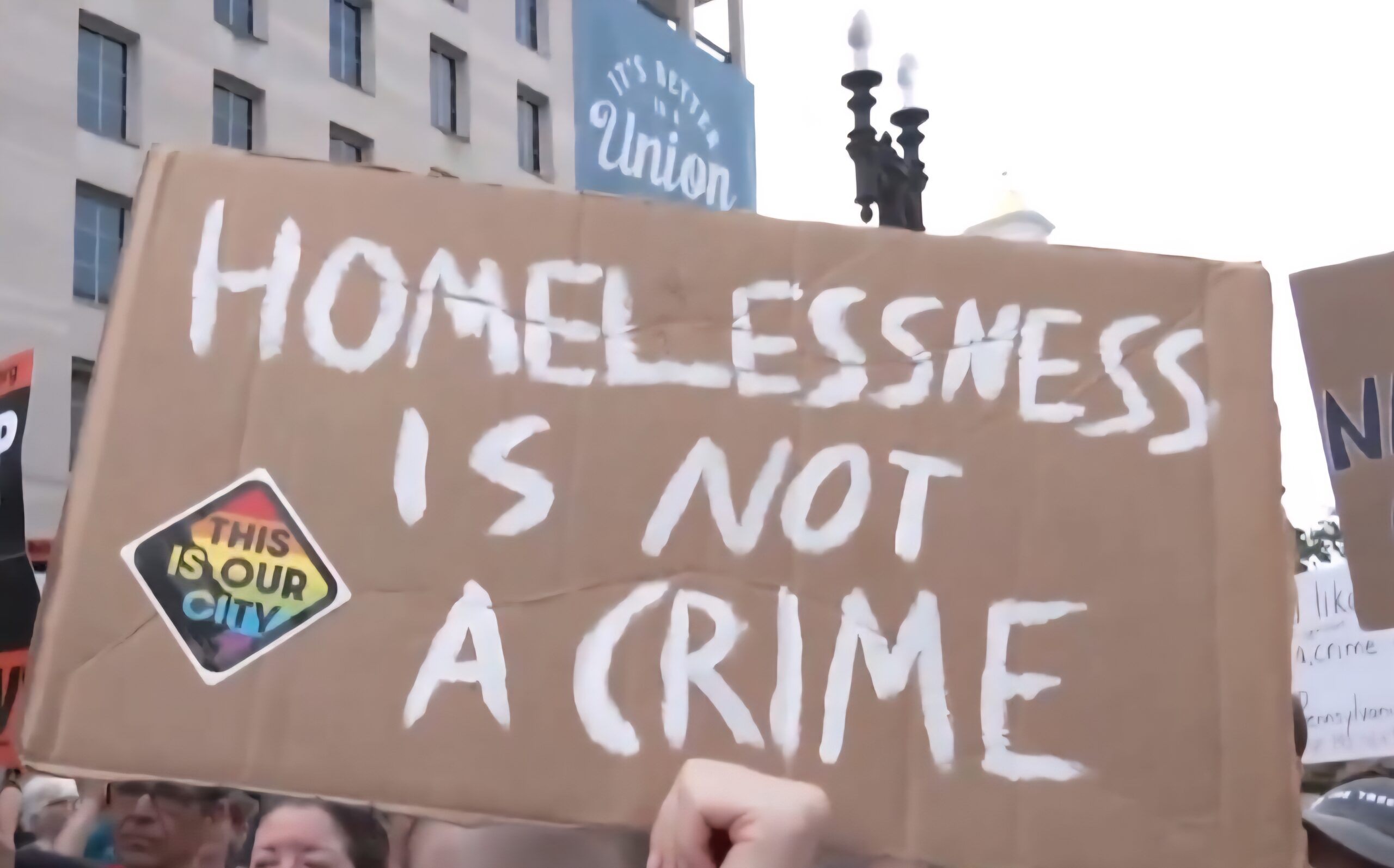
Let us be clear: homelessness is not a crime.
People experiencing homelessness have the same constitutional rights as every other D.C. resident – protection from unlawful search and seizure, due process, the right to travel, and the right to choose where they live. The solution to homelessness has always been housing. Arrests and displacement make homelessness worse, not better, and cost far more than the humane solution of providing housing. Our unhoused neighbors deserve dignity, respect, and freedom, just like we all do.
We are asking the D.C. government to create and implement a plan to offer appropriate housing or shelter to anyone sleeping on the street, with the goal of drastically reducing street homelessness before this summer’s America 250 events, when we expect federal law enforcement to increase its efforts to arrest or displace unhoused persons. You can read the letter from D.C. Council members here, as well as the response from the Department of Human Services.
How We’re Fighting Back
Providing “Know Your Rights” information and tangible support to people on the street and at encampments.
Witnessing and recording incidents of law enforcement misconduct or rights violations.
Providing legal representation and developing legal strategies for law enforcement interactions with unhoused residents.
Advocating to expand and increase accessibility of shelter and housing instead of criminalizing homelessness.
Grounding communication in facts about homelessness and homeless people, rather than myths and stereotypes.
Join our Legal Monitor Program to be trained to witness, document, and film law enforcement interactions with people experiencing homelessness. You do not have to be a lawyer to volunteer.
If you are a lawyer and would like to represent unhoused clients in these or other cases, please fill out an application. If you are a current volunteer, and you would like to take cases related to police interactions, please update your information here.
Witness Injustice
If you happen to witness a concerning law enforcement interaction with an unhoused person, please send information (date, time, location, description of what happened, description of police, and any photographs or videos) to witness.unhoused@legalclinic.org. For all other law enforcement encounters, you can follow instructions here: Film the Police DC.
Advocate
Tell elected leaders they must stand up for ALL D.C. residents. People who are homeless are particularly vulnerable to police harassment and rights violations.
If you live outside of D.C., we need you to tell your voting representatives to stand up for D.C. Home Rule and the rights of us all!
Give a Gift
Consider making a donation to the Legal Clinic to support our work. Your gift will serve the needs of D.C. residents being displaced.
Thank you to the following foundations for your urgent support to meet this unprecedented moment. It is with your generosity that we can respond urgently to the displacement and harassment of D.C.’s unhoused residents: